Agentforce Readiness: Shifting Left, and The Economics of (In)Action
What being ready for agentic AI actually means, and why the work of getting ready pays off whether or not you ever deploy an agent.
Originally published on Medium ↗

In Part 1, we examined why the "Year of the Agent" became the Year of Data Preparation, and the friction points keeping Agentforce deployments stuck in pilot purgatory: process clarity, technical maturity, organizational trust, and technical debt.
The question that follows is harder: Now what?
The instinct, especially when vendor pressure and executive enthusiasm are high, is to push forward anyway. Buy licenses. Start a pilot. Be agile. Fail fast. Figure it out as you go.
This is the approach that produces the 40% cancellation rate Gartner predicts for agentic AI projects by 2027.
"Most agentic AI projects right now are early stage experiments or proof of concepts that are mostly driven by hype and are often misapplied. This can blind organizations to the real cost and complexity of deploying AI agents at scale, stalling projects from moving into production."
- Anushree Verma, Gartner Predicts Over 40% of Agentic AI Projects Will Be Canceled by End of 2027
There's an alternative. But it requires understanding not just the cost of action, but the cost of inaction, and being honest about what your organization can actually execute.
The Cost of (In)Action
The economics of Agentforce are genuinely uncertain, and that uncertainty stalls decisions in both directions.
Salesforce introduced a consumption-based pricing model for Agentforce, approximately $2 per conversation. On paper, this aligns cost with value: you pay for what you use. In practice, it introduces the kind of budget unpredictability that makes CFOs nervous.
Traditional per-seat licensing is predictable. You know what you're paying. Consumption pricing is variable. If a customer service issue goes viral and agent usage spikes, costs spike too. Procurement teams work hard to avoid "bill shock", and fear of it slows deal cycles as finance teams model worst-case scenarios before committing.
There's a subtler problem: you're paying for conversations, not outcomes. If an agent spends fifteen turns trying to resolve an issue and ultimately fails, escalating to a human anyway, you've paid for the failure. The ROI math gets complicated when you can't guarantee resolution rates.
"Unclear ROI" is predicted by Gartner to be one of the primary drivers of cancelled AI projects over the next couple of years. This is not doomsday-forecasting, it's just capital allocation pragmatism.
When you can't model the return, you can't justify the investment.
But: there's also a Cost of Inaction.
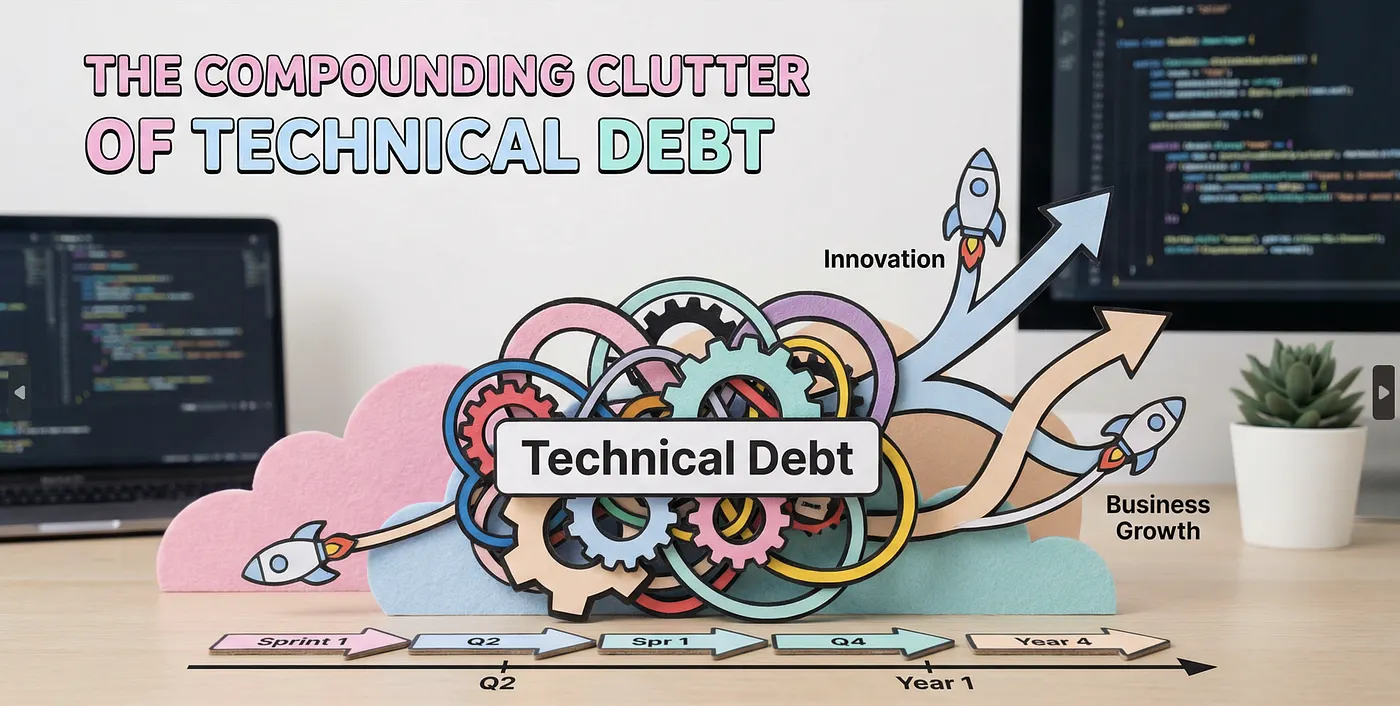
The decision to "wait and see" on Agentforce isn't cost-neutral. Technical debt research shows that unmanaged technical debt diverts up to 40% of development time toward maintenance, troubleshooting and rework rather than innovation. When a team of ten Salesforce professionals spends 40% of their time on inefficiencies caused by poor documentation, bad code, and organizational friction, the organization is effectively paying three full-time salaries for zero net new value.
This 'Innovation Tax,' the percentage of resources consumed by maintenance rather than value creation, compounds annually. It is often calculated as the Technical Debt Ratio, which illuminates the real cost of an unclear maintenance strategy. Benchmarked as a 'requires attention' issue when it reaches 10–20% (meaning 10–20 units of every 100 spent on building go to rework), the debt acts much like credit card debt and can grow out of control fast. Every quarter you delay process documentation and data remediation, the debt grows, and the remediation cost grows with it.
There's also a "Cost of Delay" specific to strategic initiatives. If technical debt causes a three-month delay in launching an AI-enabled service line because the underlying Salesforce architecture requires massive refactoring, the lost revenue for that quarter is directly attributable to the debt. CIOs report that technical debt is a leading obstacle to innovation for nearly 70% of organizations.
The total cost of Agentforce ownership extends well beyond the per-conversation fee: Expensive Data Cloud and Agentforce implementations. System integrator fees for configuration and customization. Internal resources for change management and ongoing monitoring. For many, and particularly unprepared, organizations the break-even point can stretch years into the future.
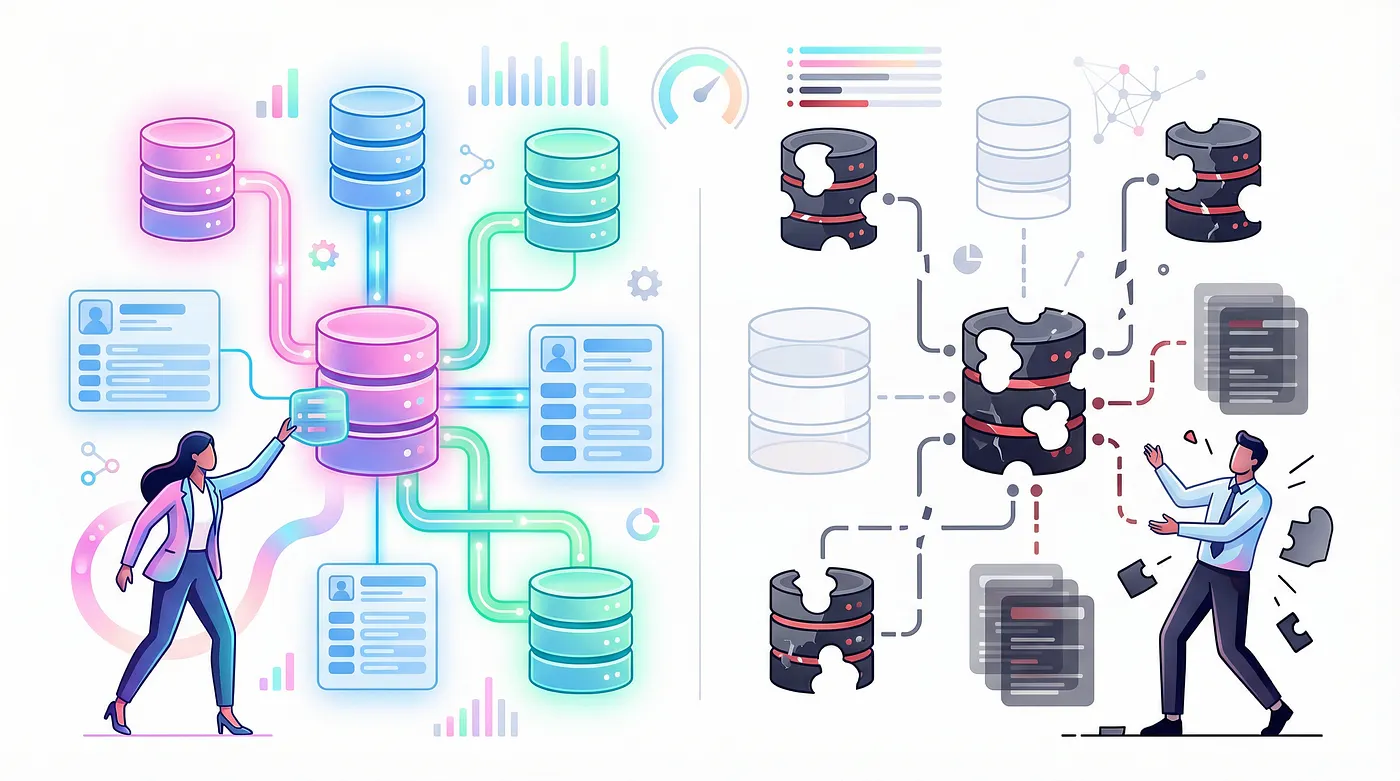
But the total cost of not preparing, of continuing to accumulate process debt, data debt, and automation sprawl, may be higher. The organizations that invest in foundations now aren't just preparing for Agentforce. They're reducing the Innovation Tax regardless of whether they ever deploy an agent.
So what can you do?
Model both sides. What does Agentforce actually cost to deploy and operate? And what does it cost to continue running your current environment without remediation? The answer isn't always "deploy immediately", but it's rarely "do nothing" either.
What This Means For Most Organizations
The research used throughout this article is predominantly American. Gartner, Forrester, Deloitte, Carnegie Mellon. The case studies Salesforce highlights at Dreamforce are often Fortune 500 giants: massive platform teams, seven-figure implementation budgets, dedicated data engineering departments.
But that's not most organizations. And it's probably not yours.

The situation likely looks more like this:
You're running Salesforce with somewhere between 50 and 300 users. There are one or two administrators, possibly part-time while wearing three other hats. Major changes happen through a consulting partner relationship. Your Salesforce investment is significant relative to your IT budget, not a rounding error within it.
When a project fails, it's not a write-off buried in a large portfolio, it's a painful and visible loss that affects technology investment appetite for the next three years. The executives who approved the budget remember. The skeptics who warned against it feel vindicated. The next initiative starts from a deficit of trust.
While this might sometimes feel like a limitation, it's just the reality that needs to be part of shaping your approach.
The research implications shift at your scale:
The 70% failure rate on complex multi-step tasks? Getting past that, to a state of consistent, valuable output typically requires the capacity to iterate, debug, and improve. If your Agentforce pilot fails and your one administrator is already stretched thin, iteration isn't realistic, and the project is more likely to be shelved entirely.
The data foundation work? The cited growth for Data 360 is driven by organizations with data engineering teams running internal projects. If you don't have that capability internally, it means consulting hours, which means budget.
The governance frameworks? In a large company with established change management strategies, there are resource pools dedicated exclusively to getting these initiatives off the ground successfully. In many smaller organizations, governance might mean "the admin and the IT manager agree it looks okay."
None of this makes Agentforce impossible. It makes the sequencing more critical. There's less margin for error, less capacity to recover from a bad deployment, and less budget to waste on premature adoption.
Don't benchmark against Fortune 500 case studies. Benchmark against your actual capacity, figure out your Cost of Inaction, investigate realistic expectations for ROI, and remember that the question isn't whether Agentforce is ready.
It's whether you are.
Shift Left: The Readiness-First Alternative
The diagnosis is clear enough: most organizations aren't ready for agentic AI. The foundations aren't there. The processes aren't documented. The metadata is tangled. The governance frameworks don't exist.
Even so, the instinct, especially when vendor pressure and executive enthusiasm are high, is to push forward anyway. Buy licenses. Start a pilot. Be agile. Fail fast, and figure it out as you go. This is the approach that produces the 40% cancellation rate Gartner predicts.
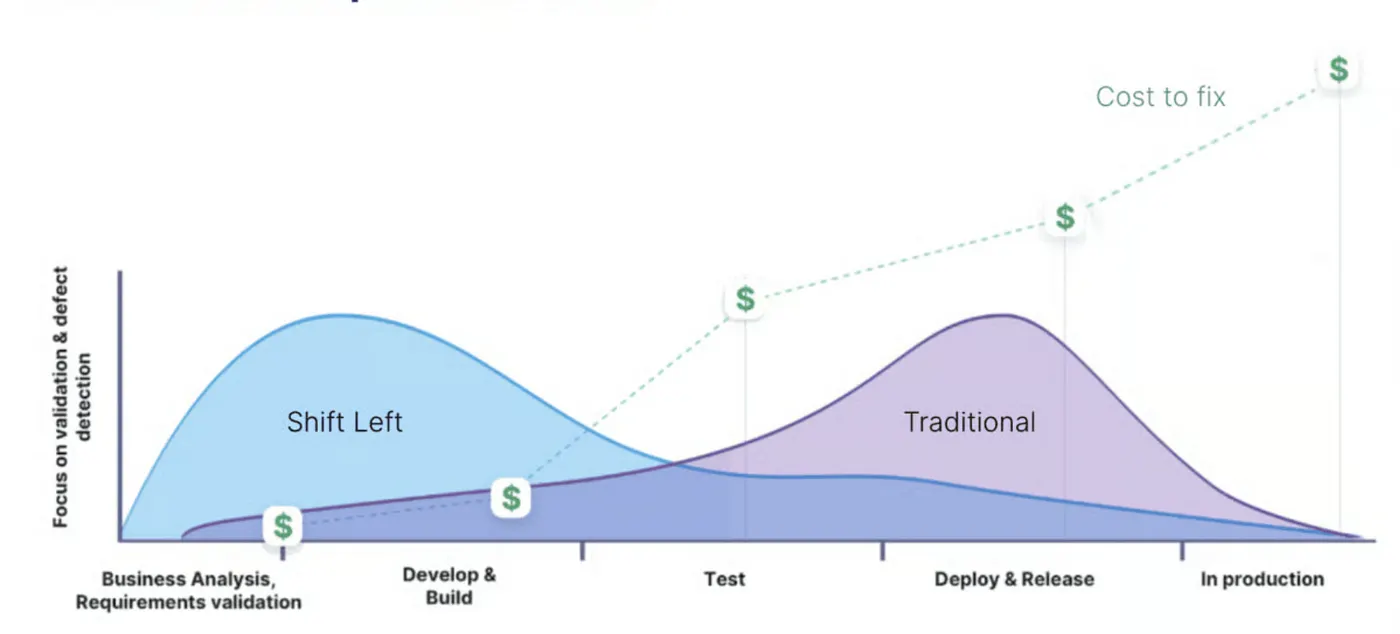
And as discussed earlier, most companies don't have wallets thick enough to truly support this approach. The alternative is to take a breath and shift left. Before licensing, before pilots, before vendor conversations, ask the question: What would need to be true for Agentforce to actually succeed here?
Then work backward from the answer.
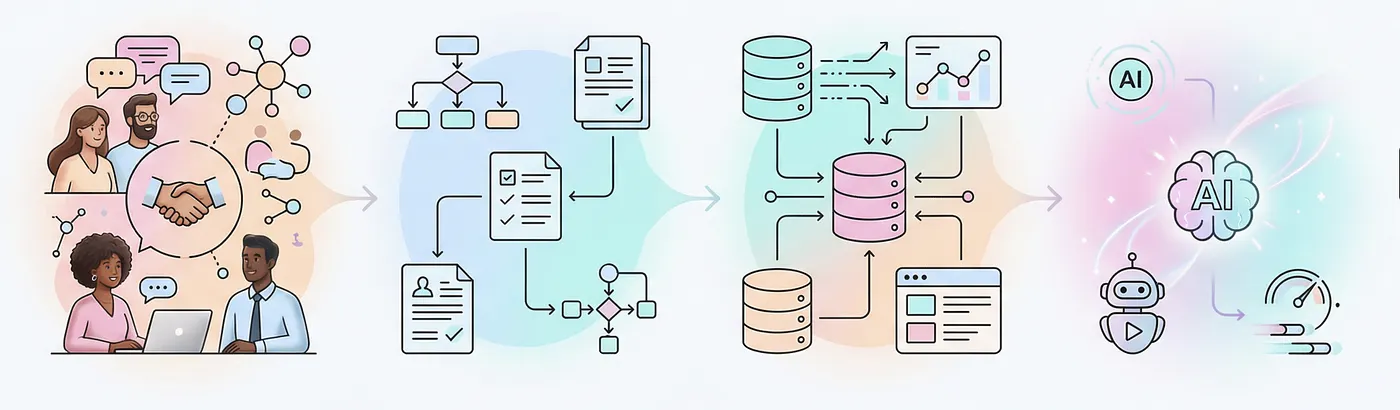
People → Processes → Data → AI
For any workflow you're considering for agent automation, four things need to be in place. Not aspirationally. Actually.
1. Process Clarity
Can you articulate, in writing, exactly how this workflow operates today? Not the way it's thought to, or should operate. The real one, with the exceptions, the edge cases, the "unless it's a Thursday and the customer is in segment A" variations.
If the process exists only as tribal knowledge, or is hidden in underdocumented legacy customizations, an agent can't execute it. If the process documentation exists but hasn't been updated in three years, an agent will execute the wrong version.
The test: Could a competent new hire follow this documentation and handle 80% of cases correctly without asking for help? If not, an agent won't be able to either.
2. Metadata Readiness
Is the process encoded in Salesforce in a form an agent can interpret? Flows, validation rules, approval processes, decision logic, not PDFs on SharePoint or bullet points in a Confluence page.
This is where automation sprawl kills you. If the "real" process involves checking three different automation layers that occasionally contradict each other, the agent will either fail or hallucinate a path through the ambiguity.
The test: Can you trace the complete automation chain for this workflow in thirty minutes? If it takes a forensic investigation to understand what fires when, you have complexity debt that needs resolving first.
3. Data Foundation
Does the agent have access to the information it needs to make decisions? Not "theoretically accessible via an integration we could build", but actually available, reliably, in real-time.
This includes the obvious: clean customer records, connected systems, resolved duplicates. It also includes the less obvious: Is the data the agent needs actually being captured? If the decision requires knowing the customer's service tier, but that field is empty 40% of the time, the agent will fail 40% of the time.
The test: Run queries for data the agent would need to run. Do they return complete, accurate, timely data? Or do they expose gaps you've been working around manually?
Could a competent new hire follow this documentation and handle 80% of cases correctly without asking for help? If not, an agent won't be able to either.
If you can't…
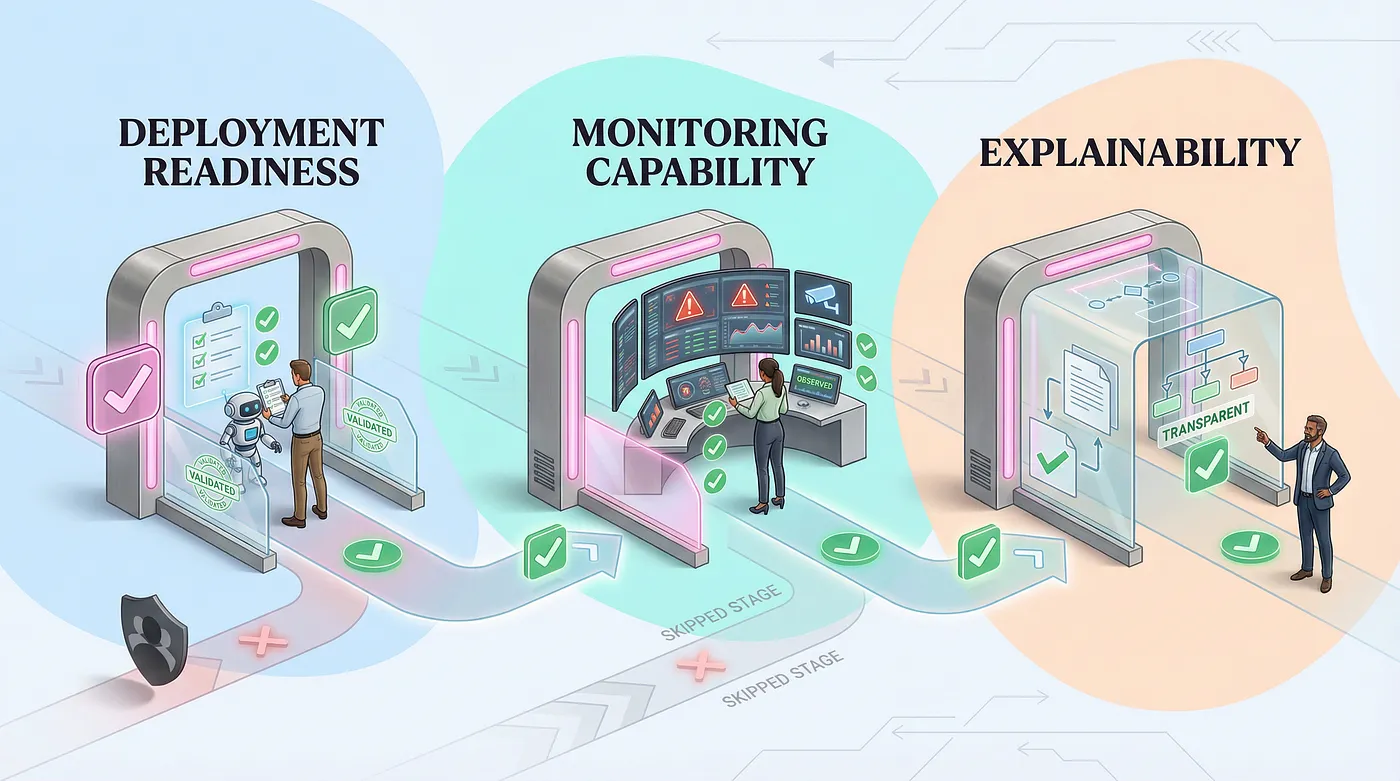
If you can't deploy it, don't buy it. If you can't monitor it, don't deploy it. If you can't explain it, don't monitor it.
Work backward from the people doing what the "agent in production, handling real customer interactions" would do, and identify every dependency. That's your readiness roadmap. You'll likely find that it's longer than you want it to be.
But instead of frustration, you'll find clarity. The Rube Goldberg machine you've been maintaining for years finally becomes legible, and you'll understand what happens when you tip the first domino.
By now, it should be clear that this is not a slogan, but rather a change deployment sequence in order of importance. Start with people: Who owns this process? Who knows how it actually works? Who needs to be involved in changing it? Who will supervise the agent once it's live?
Then processes: Document them. Validate the documentation against reality. Encode the logic in metadata. Resolve the automation conflicts.
Then data: Connect the systems. Clean the records. Fill the gaps. Build the unified foundation the agent needs.
Then AI: Now you have something to work with. Clear processes, clean metadata, reliable data, accountable humans.
Again: the organizations who have used 2025 as their "data preparation year" are on the right track, and hopefully also looking at their process documentation, governance frameworks, and skills development. If not, they're still just solving half the problem.
So, now what?
Where does all of this leave us, and what's in store for 2026?
With a choice, mostly. You can chase the hype cycle. Buy the licenses, spin up a pilot, hope the foundations sort themselves out along the way. Some organizations will make that work. Most won't, and they'll be worse off for it.
Or you can resist the pressure to decide quickly and treat the immediate future as the preparation window it actually is. Hype creates urgency. Demos feel like proof. Competitor announcements trigger anxiety. The instinct is to act, buy the licenses, start the pilot, figure it out later. That instinct is usually wrong.
The organizations that succeed will be the ones who slowed down long enough to ask: What would need to be true for this to actually work here? And then did that work first.
Simply because you looked at the evidence and decided to do it right.
The work doesn't sound exciting. Process documentation, metadata cleanup, governance frameworks and change management. This typically doesn't demo well. Nobody gets promoted for retiring legacy workflow rules. But it's the work that separates you from the danger zone, and keeps you in the winning zone now and in the future.
And crucially: that work has value regardless of what happens with Agentforce. Clean metadata makes every deployment faster. Documented processes reduce onboarding time and key-person risk. Research from 10K Advisors found that 91% of organizations reporting very high Salesforce ROI have an established Center of Excellence, a correlation that holds across company sizes and regions. You're not betting everything on autonomous agents paying off. You're building a foundation that pays off either way.
That's just good strategy.
Don't guess at your readiness. Audit it.
If you need a framework for that conversation, follow me here and on LinkedIn to read more about how to make 2026 The Year of the Agent for you.