Decision Velocity = (Clarity × Confidence) / Complexity
Why capable teams take weeks to decide what they already know.
I once watched a leadership team discuss the same investment four times. Each meeting reached the same conclusion. Each meeting failed to approve it. Six months later, the project either got approved at twice the original cost because the problem had grown, or got quietly killed when a new sponsor came in and started the analysis from scratch.
Call it decision-velocity zero. The team was competent enough. The analysis was solid enough. They still couldn't pull the trigger. The block lived somewhere other than the obvious places.
What was broken in that meeting, and in many like it, can be expressed as a formula.
Decision Velocity = (Clarity × Confidence) / Complexity
Three variables. The multiplication in the numerator is load-bearing: both have to be present. Clarity alone produces motion in random directions. Confidence alone produces fast wrong calls. Complexity in the denominator means every additional process layer and stakeholder divides whatever you build above the line.
Clarity
In Low Clarity + High Demand = Overwhelm I made the case that organizational overwhelm is a clarity problem in disguise. Clarity comes in three forms: strategic (what game are we playing?), operational (who owns what, by when, to what standard?), and cultural (how do we share knowledge, raise problems, and respond when things go wrong?). All three feed the numerator.
Clarity is preparation. The decision still has to be made. Plenty of organizations know what they should do and still don't do it.
Confidence
Clarity tells you what to decide. Confidence is what lets you actually decide it.
Confidence is three things: the permission to act, the conviction that you should, and the backing that the call will hold once it's made. Each fails independently, and each shows up in the room differently.
Permission. You have the authority to decide, and you trust that using it won't cost you. This is closest to Amy Edmondson's psychological safety, but framed as a positive permission rather than the absence of fear. When permission is missing, decisions get deferred upward indefinitely. The visible signal: "I'll need to check with..."
Conviction. Your analysis is solid enough that you trust your own judgment. You're not requesting more data because you're scared; you're acting because you've earned the right to. When conviction is missing, decisions stall on requests for additional information that the room already has, dressed up as due diligence. The visible signal: "Let's get a few more data points first."
Backing. When you make the call, the people around and above you will support it. The decision won't be re-litigated by the next person up the chain. Your sponsor won't disown it when the downside shows up. When backing is missing, capable people who agree with the call still won't put their name on it. The visible signal: "I'm not against it, but I'd want to see broader buy-in first."
A three-dimensional trust framework I've worked with maps onto these three: trust in ourselves, trust in each other, trust from others. Trust in ourselves is what lets conviction form. Trust in each other is what makes permission feel real. Trust from others is what backing actually is.
Complexity
The denominator most organizations ignore.
Some complexity is the work itself: strategy under uncertainty, pricing in a competitive market, choosing between two solid product directions. That kind of complexity is the question; it justifies its cost.
The other kind is what every organization accumulates over time. Some of it was added intentionally and made sense at the time. Some of it grew without anyone deciding, the residue of past incidents, departed colleagues, and forgotten compromises. Both compound. The unintentional kind is harder to dismantle because nobody remembers why it's there, and "we've always done it this way" is the only reason that survives.
I've called this complexity debt elsewhere. Each piece of overhead was once a reasonable response to a real problem. The problem went away, the overhead stayed, and the next person to encounter it assumed it was load-bearing because it existed. This is why decisions need to be documented when they're made, and revisited as friction grows.
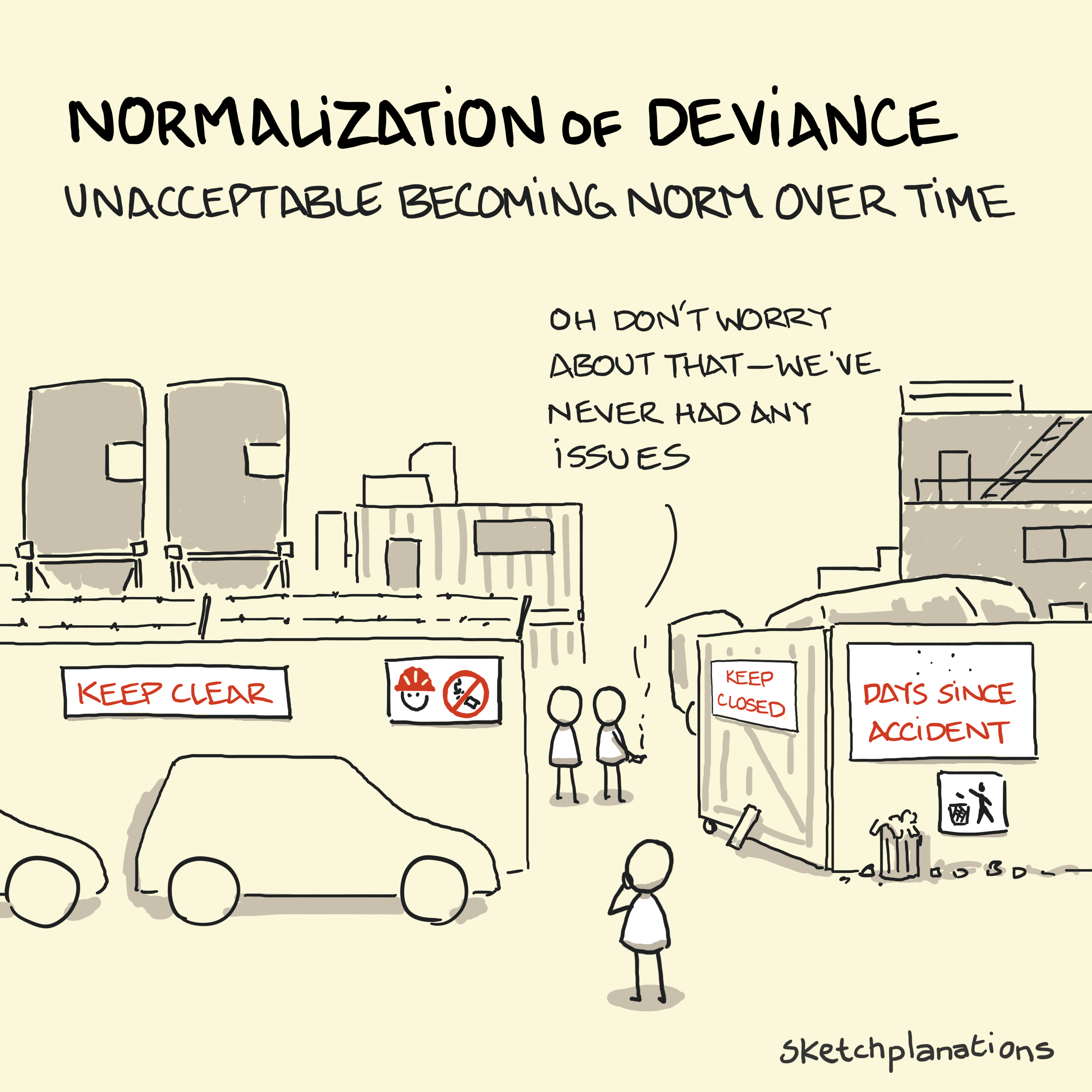
The cure runs in two directions. Forward: when you add a process step, document why. Backward: pick an existing step and try to remove it for one cycle. Note who pushes back and whether the reason holds up. Most pushback is reflexive. Some is real. The exercise tells you which is which faster than any audit.
Reducing complexity is unglamorous, granular work: saying no to additions, removing approvers, deleting steps from processes that already work, tolerating the brief discomfort of someone who notices they've been removed from a thread they didn't actually need to be on. Most organizations prefer multiplying the numerator (clarity initiatives, trust-building exercises) over reducing the denominator.
The math works the same either way. Cutting complexity in half doubles velocity at zero cost.
The formula tells you why your easy decisions are taking weeks.
The diagnostic
When a decision stalls, watch what people reach for first.
If the meeting ends with "we'll circle back when X is clearer," clarity is the gap. Often the data is sufficient and the question isn't named clearly. Nobody is sure what they're deciding.
If people reach for any kind of safety net before they'll commit (more analysis, an executive sponsor, broader buy-in), confidence is missing. Whether it's permission, conviction, or backing, the safety-net behavior is the same.
If the meeting adds people, adds review steps, adds a working group, complexity is winning. The system has trained the room to dilute decisions rather than make them.
Clarity tells you what to decide. Confidence is what lets you actually decide it.
The default fix tells you the missing variable. The same variable is usually missing across multiple stuck decisions in the same organization. Stuck decisions cluster, sharing root causes. Identify the cluster, and you've identified the leak in the formula.
All three variables are observable. The cost is attention: watching what people reach for when a decision should be getting made.
The formula tells you why your easy decisions are taking weeks.
The variables can be moved.
Part of a series. The companion piece, Low Clarity + High Demand = Overwhelm, makes the diagnostic case for clarity itself.